

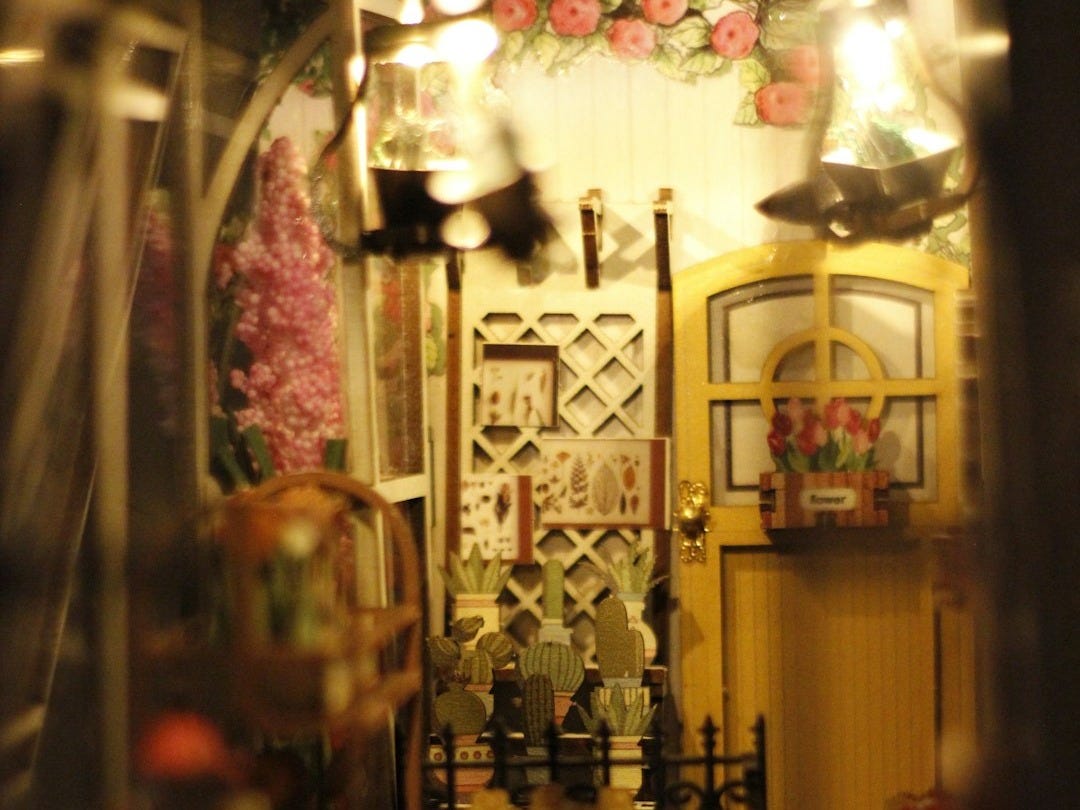
Miniatures and dollhouses have never been more popular. After a dollhouse boom in the 1970s and 1980s, the hobby was out of the public eye for many years. Most of the dollhouse stores and publications listed in a 1994 New York Times article have long since gone out of business.
Social media, however, has turned this once quaint and solitary hobby into an all-out phenomenon. On TikTok, Instagram, and YouTube, makers, collectors, creators, and curators of tiny worlds have built devoted communities of passionate miniature obsessives.
In 2025, the global miniature market was estimated at roughly $1.2 billion and is expected to continue growing over the next decade. But anyone who loves miniatures can tell you it’s not about the money or the social followers. It’s about a devotion that keeps you up at night planning your next room. The little gasp when you see a tiny something you must have. It’s about the passion to work and work and work on a dollhouse with tiny tools and shaking hands to painstakingly decorate one room at a time.
What has changed, though, is how easy it has become to find the things we love.
Thirty years ago, a miniature enthusiast might have been limited to whatever happened to be available at a local dollhouse shop, a craft store, or through a mail-order catalog. If you wanted a Victorian stove, a French provincial sofa, or a particular scale of wallpaper, you often had to order by catalogue, travel to a miniature show, or find a dollhouse store near you.
Today, the miniature world is one giant global marketplace.
Search for dollhouse miniatures on Etsy and you’ll find thousands of listings and countless specialized sellers offering everything from hand-thrown pottery and artisan foods to laser-cut furniture, lighting, wallpaper, and custom-made pieces.
Miniaturists can browse eBay for vintage treasures, estate-sale finds, discontinued collectibles, and artisan pieces from decades past. Amazon offers affordable basics, tools, lighting supplies, and starter kits. Specialty retailers continue to serve collectors looking for high-end artisan work. Facebook groups, Instagram shops, miniature shows, and independent websites connect buyers directly with creators from around the world.
The sheer variety of miniatures available today would have been unimaginable to many collectors just a generation ago.
Whether your dream project is a cozy cottage kitchen, a mid-century modern ranch house, a gothic mansion, a realistic grocery store, or a fantasy fairy dwelling, chances are someone is making exactly what you need and at a variety of price points.
Not every miniaturist has the budget for artisan furniture that costs hundreds of dollars per piece. The growth of online marketplaces has created room for every level of collector. Beginners can find affordable starter pieces and DIY kits. Experienced hobbyists can invest in museum-quality artisan work. Many collectors mix both approaches, combining inexpensive finds with special statement pieces.
The modern miniature community has more creators, more collectors, more inspiration, and more opportunities than ever before. A hobby that once depended on a handful of local stores and niche publications is now supported by a worldwide network of artists, entrepreneurs, and enthusiasts and all of their social media accounts documenting their collections and work along the way.
That’s good news for everyone who loves tiny things.
Tell me how you started collecting miniatures in the comments.