

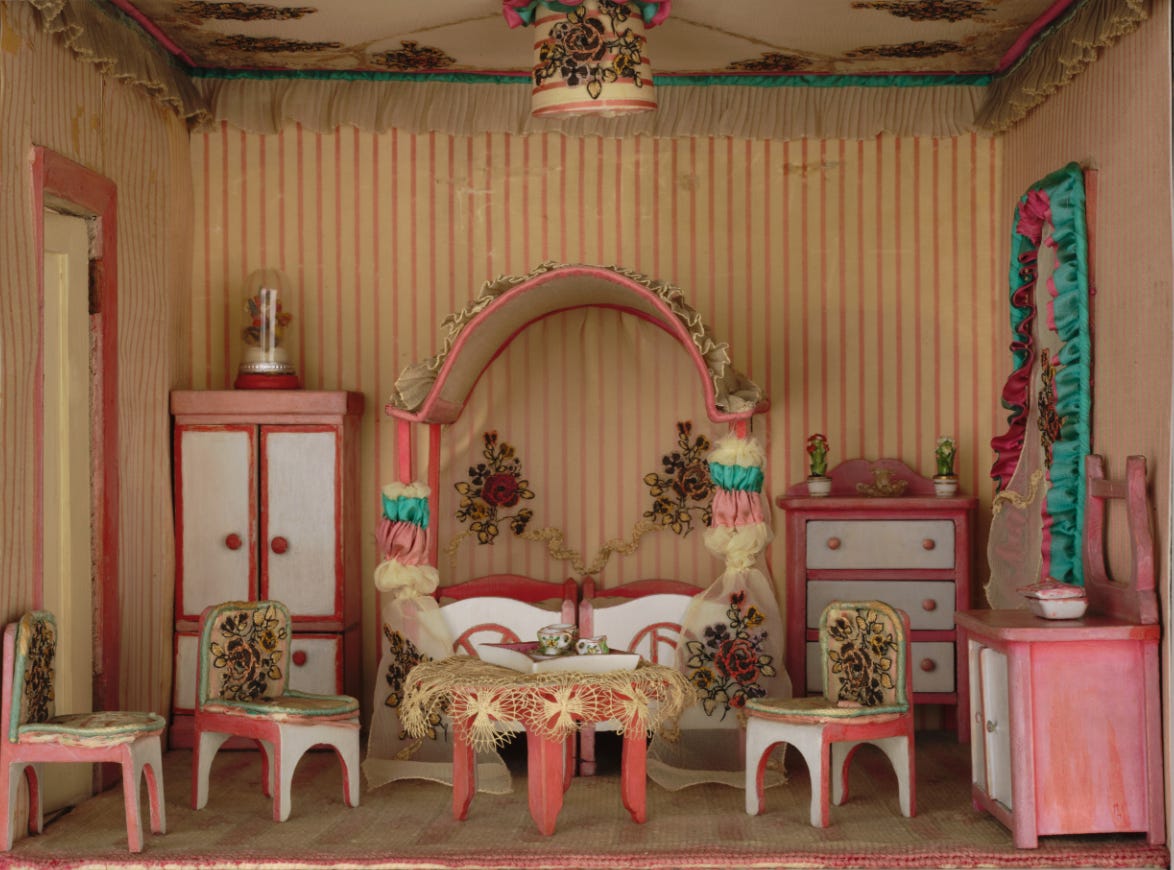
Every dollhouse devotee starts small, but that doesn’t mean we don’t have big dreams. Even if your dollhouse is little more than a starter kit or a fancy cardboard box, you may well be on your way to miniature greatness. If you need some inspiration to take your love of miniatures to the next level, these world-famous miniature mansions are exactly what you’re looking for. And while most of us will never own a dollhouse as grand as these, that doesn’t mean we can’t dream!
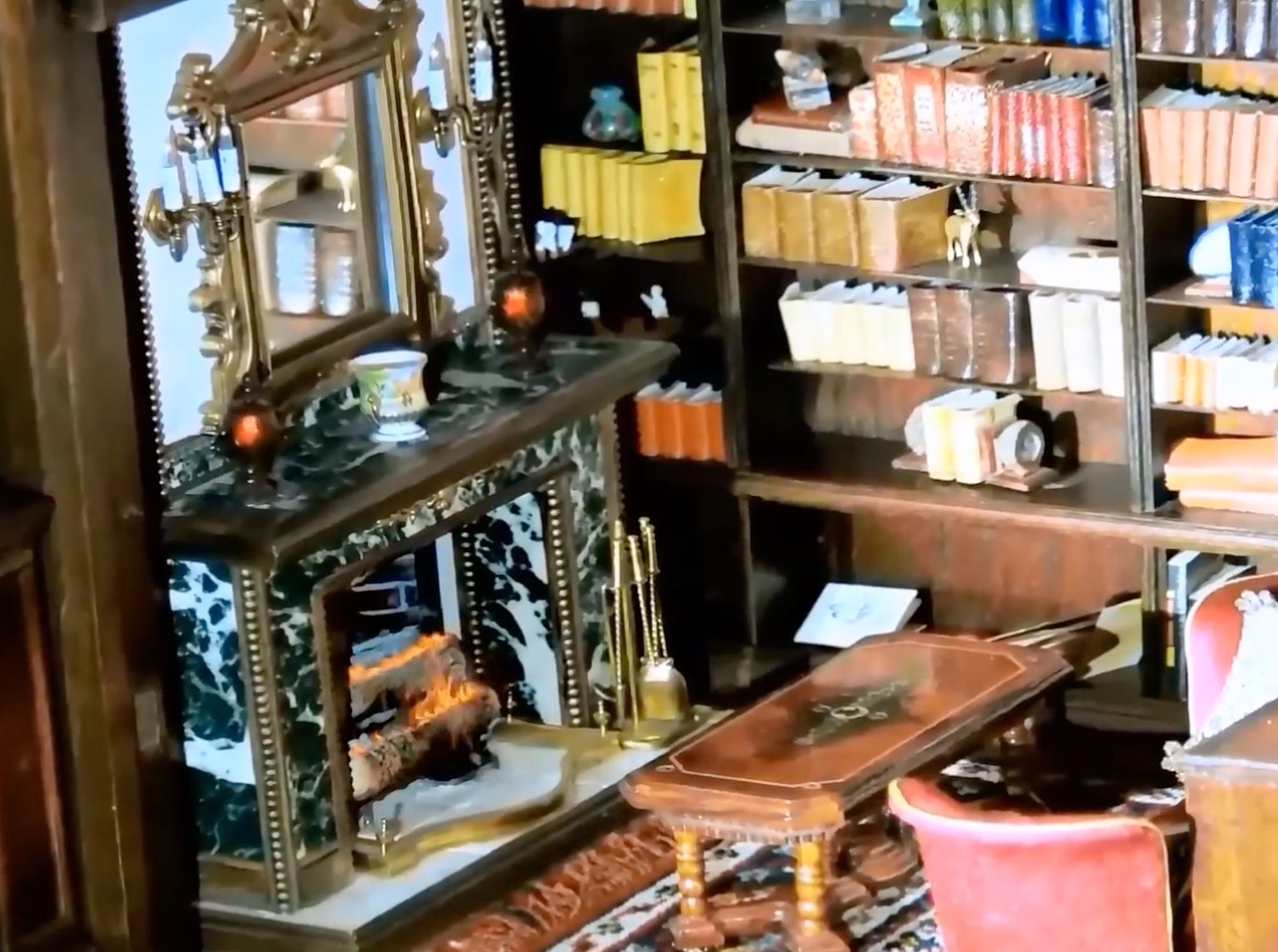
Astolat Dollhouse Castle
The 1:12-scale Astolat Dollhouse Castle was created over a 13-year period between 1974 and 1987, primarily by master miniaturist Elaine Diehl, with assistance from artisans throughout the world. It was originally located in Sedona, Arizona, where Diehl created it.
The castle has 29 rooms and includes working fireplaces, stained-glass panels and 10,000 handcrafted miniature pieces, including original works of art, gold chandeliers and the smallest antique Bible in the world. It is 9 feet tall, weighs 800 pounds and was valued at $8.5 million in 2015. The castle includes 10,000 unique miniature fittings, paintings, chandeliers, rugs, tapestries and furniture.
The castle was acquired by collectors Michael and Lois Freeman in 1996 and is currently not on display, but remains in the collection of the Nassau County Museum of Art in Roslyn Harbor, New York. The Astolat’s official website website says that it will be back on display soon and you can sign up here to get information when tickets are available.
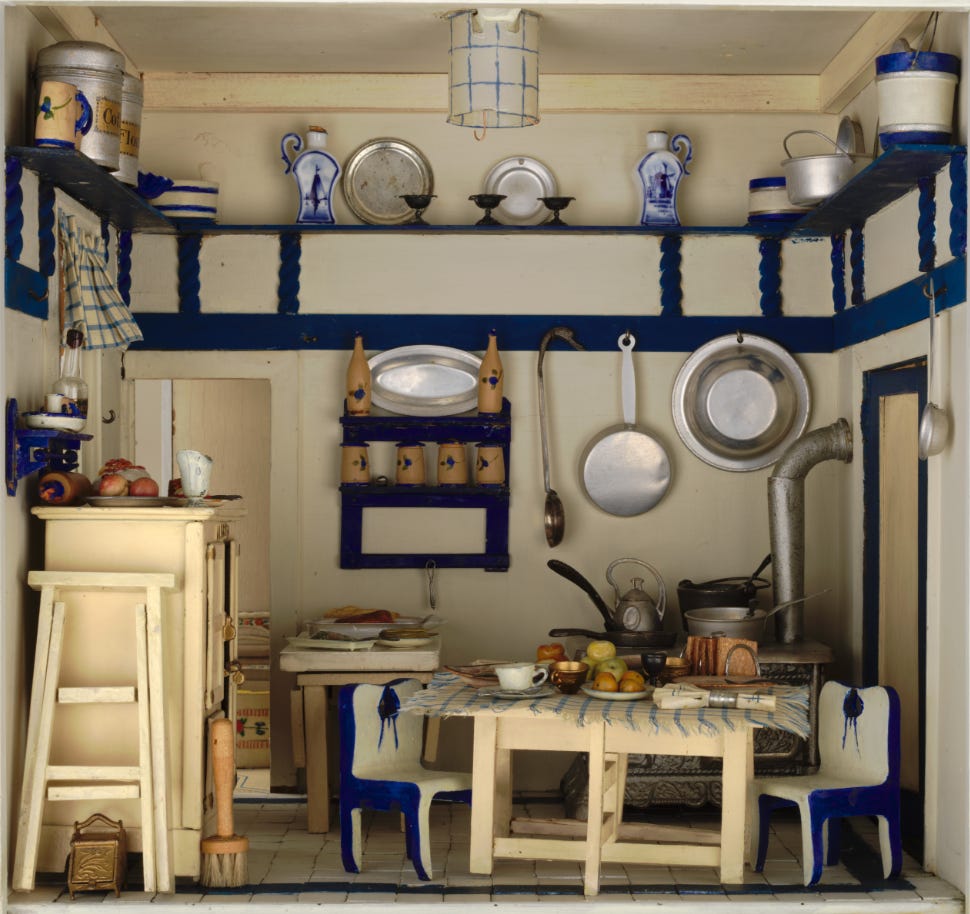
The Stettheimer Dollhouse
Created by Carrie Walter Stettheimer between 1916 and 1935, the two-story, 12-room dollhouse is a detailed portrait of the sophisticated artistic circles inhabited by Carrie and her sisters, Florine and Ettie Stettheimer. While Florine was a celebrated painter and Ettie an accomplished writer and philosopher, Carrie devoted nearly 20 years to crafting the dollhouse by hand, filling it with intricate furnishings and decorative details that reflected the stylish, avant-garde world they shared.
The dollhouse is especially renowned for its miniature art collection. Many of the Stettheimer sisters’ artist friends contributed tiny original works, including Marcel Duchamp, Alexander Archipenko, George Bellows, Gaston Lachaise and Marguerite Zorach. These miniature masterpieces transform the dollhouse into a unique record of early 20th-century American modernism and the creative community that flourished around the Stettheimers.
After Carrie stopped working on the project following her mother’s death in 1935, some rooms remained unfinished. In 1945, her sister Ettie donated the dollhouse to the Museum of the City of New York, where it was on display until earlier this year. The museum’s visitor services tell me it will be back on display in late 2027.
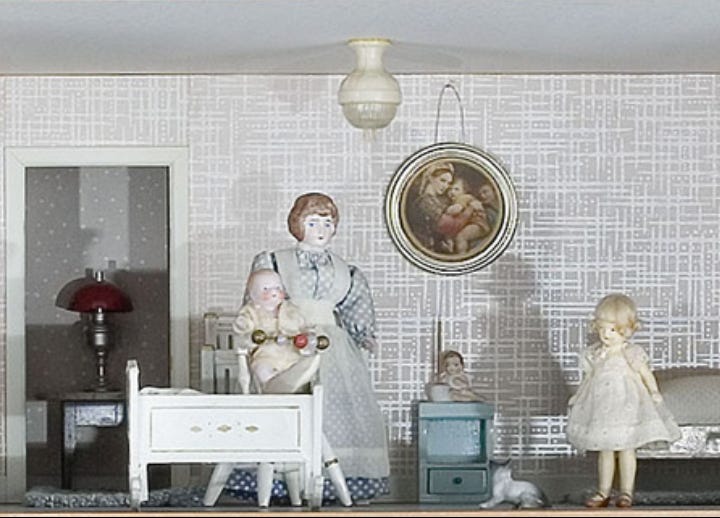
The Doll’s House by Faith Bradford
Faith Bradford was an American librarian and miniature enthusiast. Over the course of more than 50 years, Bradford created a five-story, 23-room miniature home filled with more than 1,300 carefully crafted objects depicting the life of a wealthy American family at the turn of the 20th century.
The 1:12-scale house contains furniture, linens, toys and other household items. The house also includes miniature inhabitants named Mr. and Mrs. Peter Doll; their 10 children; two visiting grandparents; five servants; and 20 pets.
Donated to the Smithsonian in 1951, the dollhouse is currently on display at the National Museum of American History.
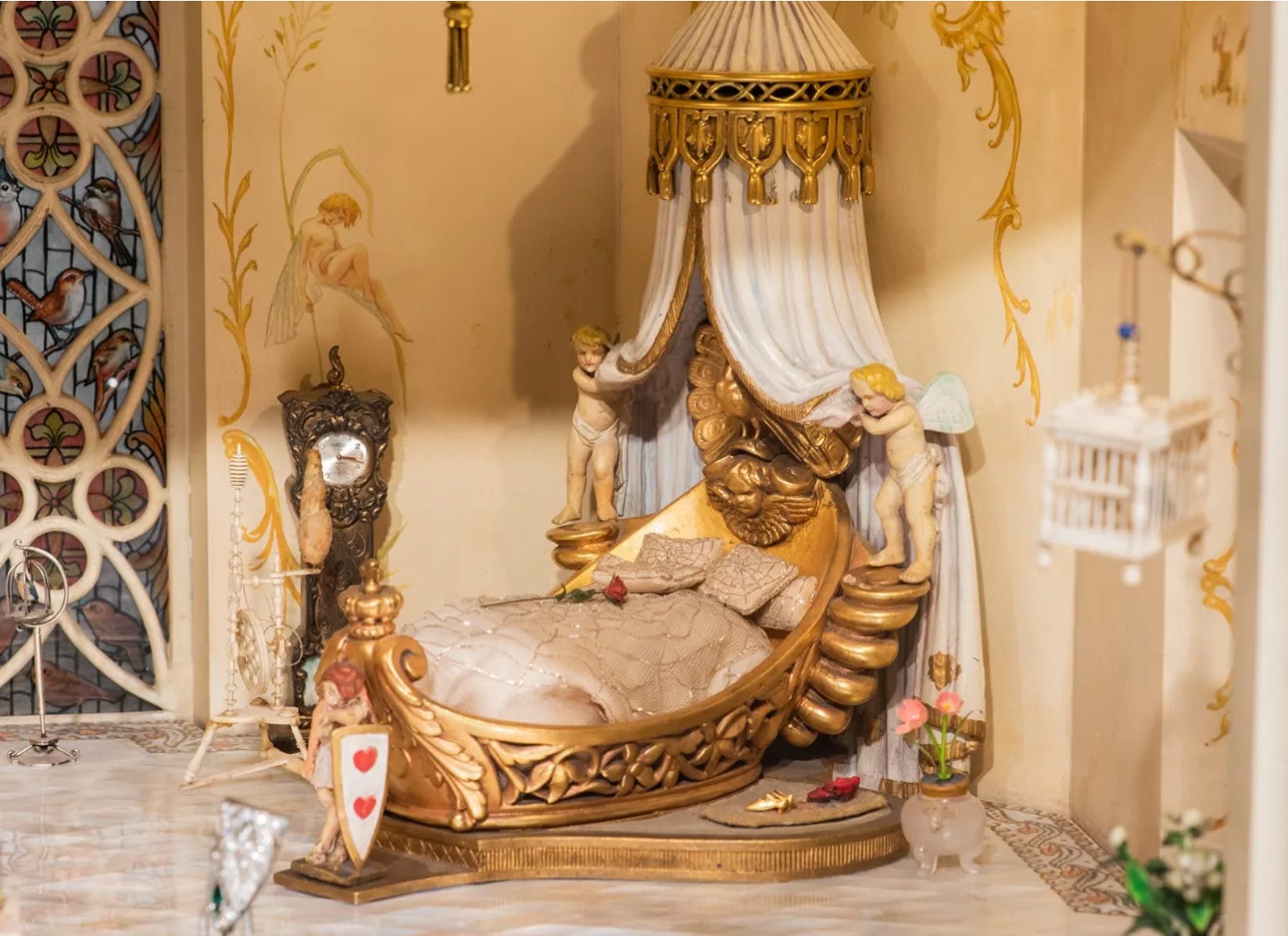
Colleen Moore’s Fairy Castle
Colleen Moore’s Fairy Castle is a spectacular dollhouse conceived by the silent film star and built between 1928 and 1935. Inspired by a lifelong love of dolls and miniatures, Moore worked with a team of artists, designers and craftsmen to create a fantasy castle unlike anything that had existed before.
Measuring more than 8 feet tall and containing more than 1,500 miniature objects, the castle required the efforts of approximately 100 people and cost nearly $500,000 to complete. Every detail was carefully crafted, and the structure was ingeniously designed so it could be dismantled into 200 individual pieces for transportation.
Beginning in 1935, Moore organized a nationwide tour of the Fairy Castle, displaying it in major department stores across the United States to raise money for children’s charities.
In 1949, the Fairy Castle found its permanent home at the Griffin Museum of Science and Industry in Chicago, where it remains one of the museum’s most beloved attractions.
Tell me if you’ve ever seen one of these famous dollhouses!
I may never get to see them in person so thanks for showing them some Substack Love! ❤️